
Milpa: A Solstice Dispatch
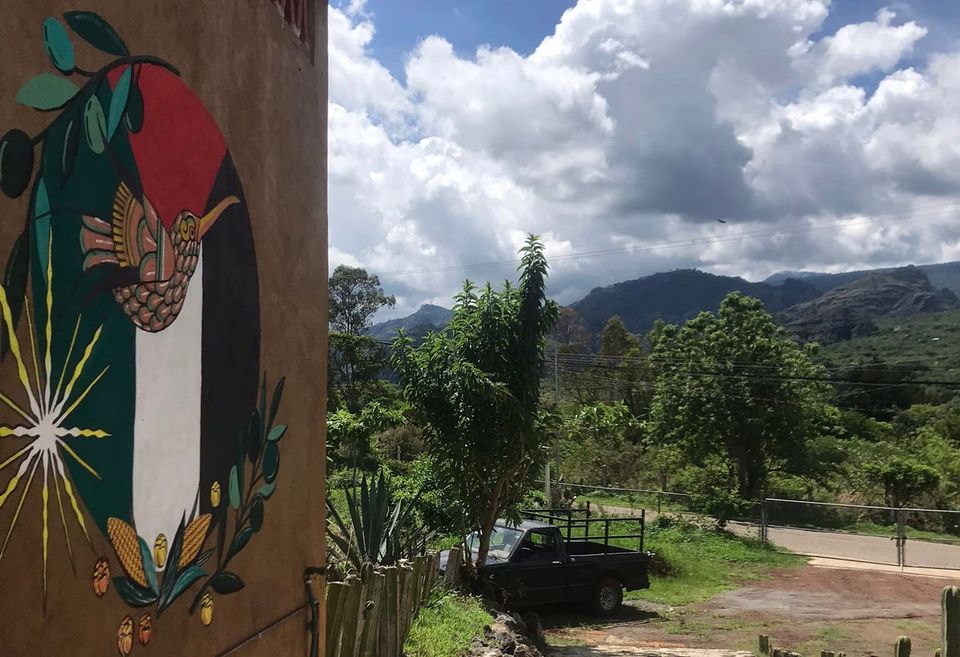
Each containing something the others lack nutritionally, sowing a maize plant, a squash vine, and a beanstalk in close quarters supports plant, soil, and human health. This is the essence of milpa, an agricultural philosophy practised across Latin America, particularly Central America, for a very long time indeed. You can imagine how such an elegant subsistence method also plays a role in its many and various cosmologies. A bonus detail I like about milpa is that it supports the spontaneous growth of huitlacoche, a delicious parasitic fungus, and wild greens like verdolagas, both of which grow on the corn and supply multiple secondary harvests through the season.
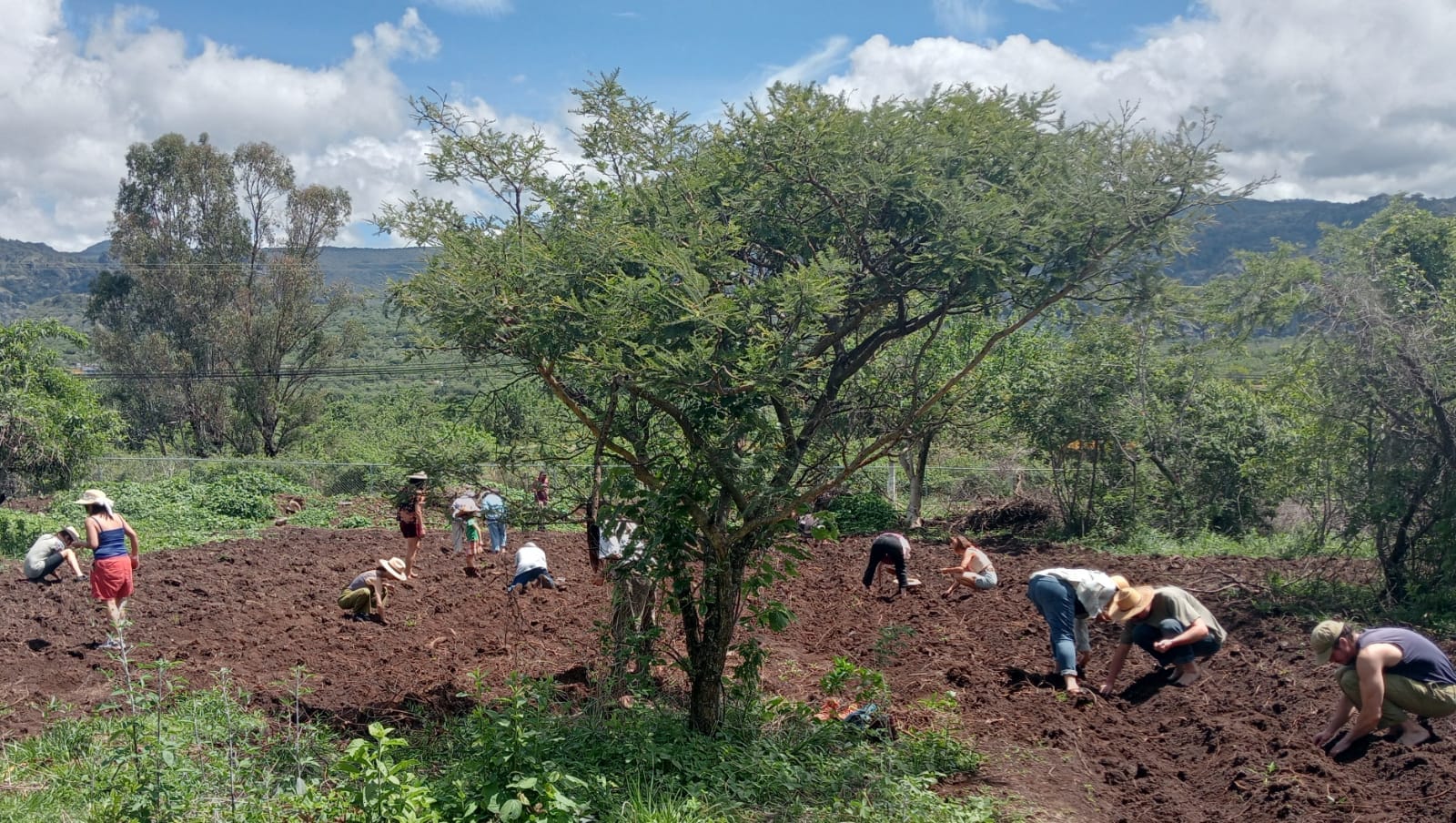
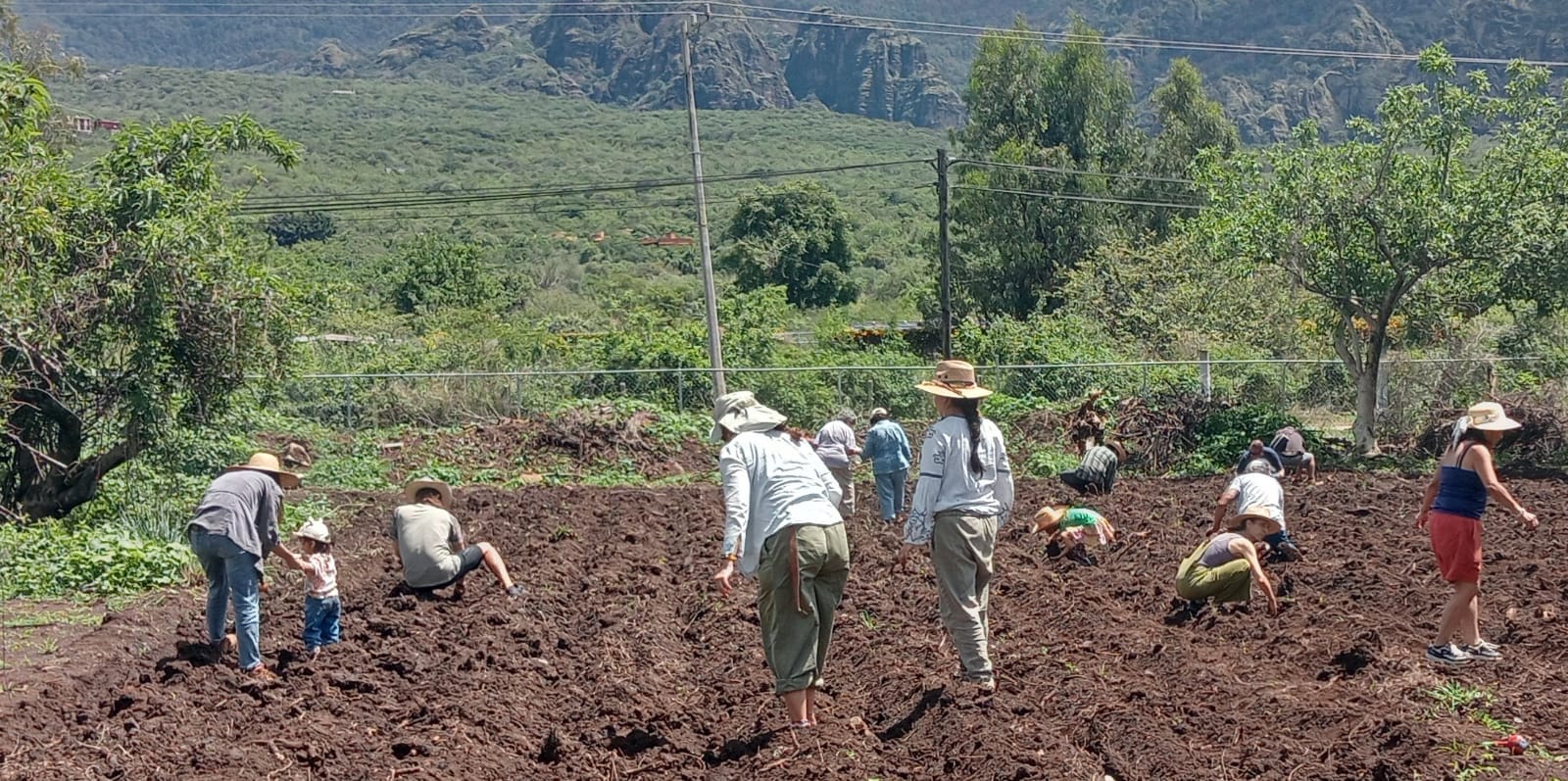
I know this because the highlight of my solstice weekend was sowing corn for the milpa at Casa Tecmilco, a venue for group discussion, seminars, and small-scale agriculture outside Tepoztlán, Morelos. Those who run the place are directly participant in local and national struggles against dispossession and forced disappearance. Last week they were involved in the demonstrations led by Mexico’s teachers and Madres Buscadoras against the state and the World Cup.*
We took a bowl of white kernels between two and chatted our barefoot way down furrows the tractor had made. Three kernels went into each hole: someone said one was for the ants of Mexica mythology, one was for us, and one for the creature who might make away with it in the night. For all the self-consciousness of a guy raised in a city on the other side of the Atlantic, it felt unaffected and practical. Between twenty of us, the sowing was over by mushroom soup-time, after which some danced salsa and mezcal was poured out in inch-tall drams.
Later Pascual, one of the centre’s founders, and I sat on a bench to talk. For safety, I won't disclose the reasons that led him to a life in service of many causes relating to land rights and the survival of communities. These have ranged from the theft of water by Pepsi to human trafficking. He rightly observes and draws on their common ground, putting those who seek justice in touch with one another as a source of strength and hope. Casa Tecmilco's other name, it should be noted, is Casa Palestina. To Pascual, like many first-hand witnesses to CIA-backed coup after CIA-backed coup, puppet regime after puppet regime, embracing Palestinian liberation is as natural as anything. Why wouldn't it be, the genocidal Zionist project forming part of an ideology and imperial apparatus he, like the Madres Buscadoras and countless other organisations, has been fighting for decades. A mural that runs along the side of the house, easily seen from the road, reads ‘desde el rio hasta el mar, Palestina vencera’. It's the most visible pro-Palestinian sign anywhere in the valley, which was a Zapatista stronghold just over a hundred years ago.
To spend the longest day like this – sun-blessed, soily, mezcal-cheerful, and full of tortillas – was pure pleasure as you can imagine. But its significance hit me especially hard, having flown to Mexico from Heathrow the day four people of moral brilliance were sentenced to over twenty-two years in prison in Woolwich. The cortisol from following events is still in me. Leaving after two weeks of far-right violence across the UK and the cowardly Patriotic Alternative demonstrations in Glasgow, was painful too. Indeed, the violence only got closer to home.
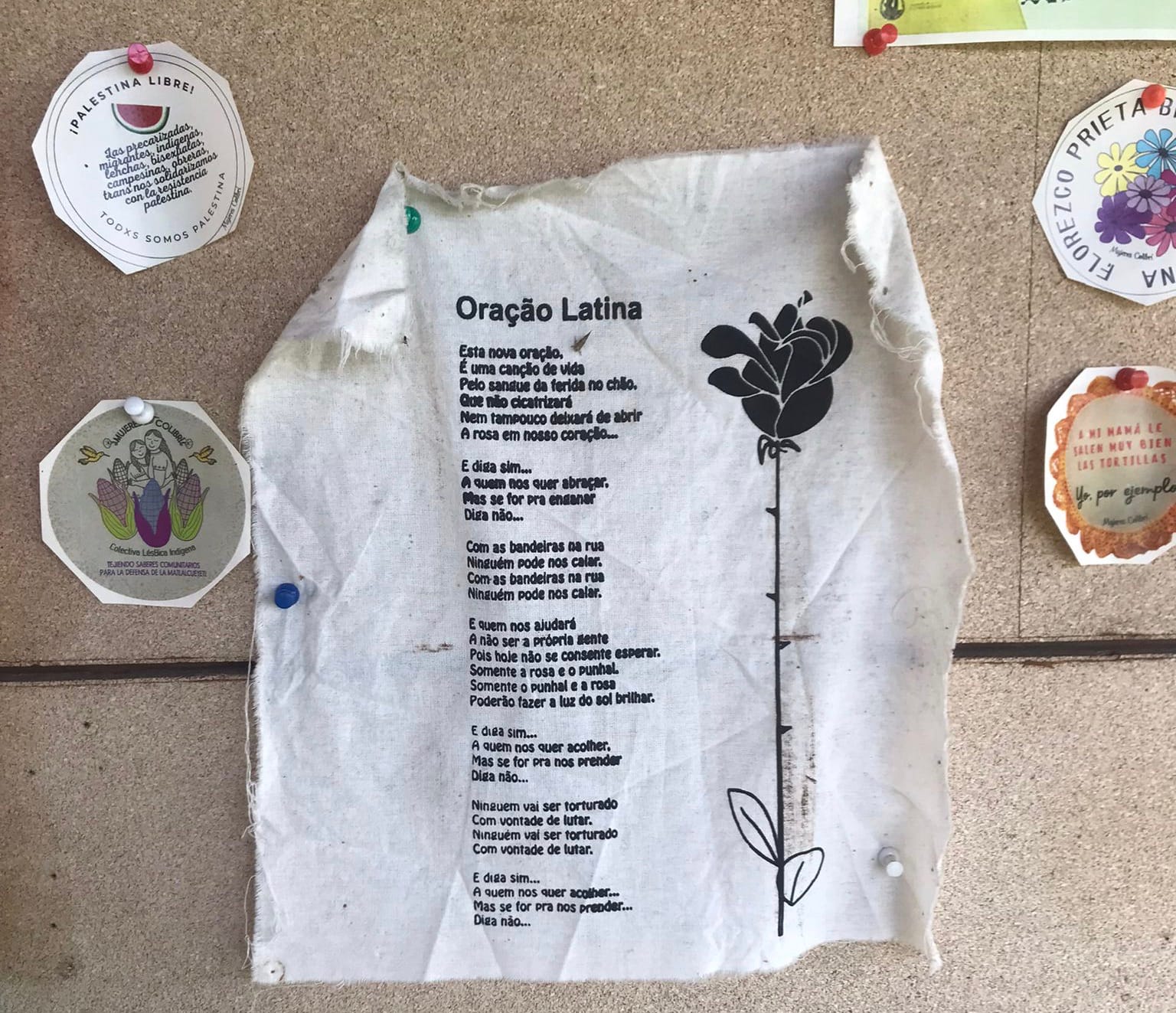
Wet Grain remains a home for original poetry and essays in the confidence that their imagination and substance are necessary to stop that violence. In remembering that Karadzic, leader of the Bosnian Serb fascists and author of the Srebrenica genocide, believed himself a poet, we get a sense just how important it is that our poetic landscape is as alive to human experience as we can make it. We know that political poetry is hard to do well (when it is done well, we welcome it) but it's worth reminding ourselves that poetry has a dissenting side to it by nature anyway. The state of mind to harness it can be found in the sanctuary of places like Casa Tecmilco, in sowing corn with strangers and preparing the ground for squash and beans.
Solidarity and more soon,
Patrick
*In their reporting on the protests, the BBC (patronisingly, idiotically) frame the World Cup as ‘a rare opportunity’ for demonstrators to voice their causes in the media spotlight. We know that the data- and profit-driven media concerned – themselves foremost among them – will lazily gloss it and then turn a blind eye as it did in Qatar, Russia, and Rio: censorship by token effort and smothering.